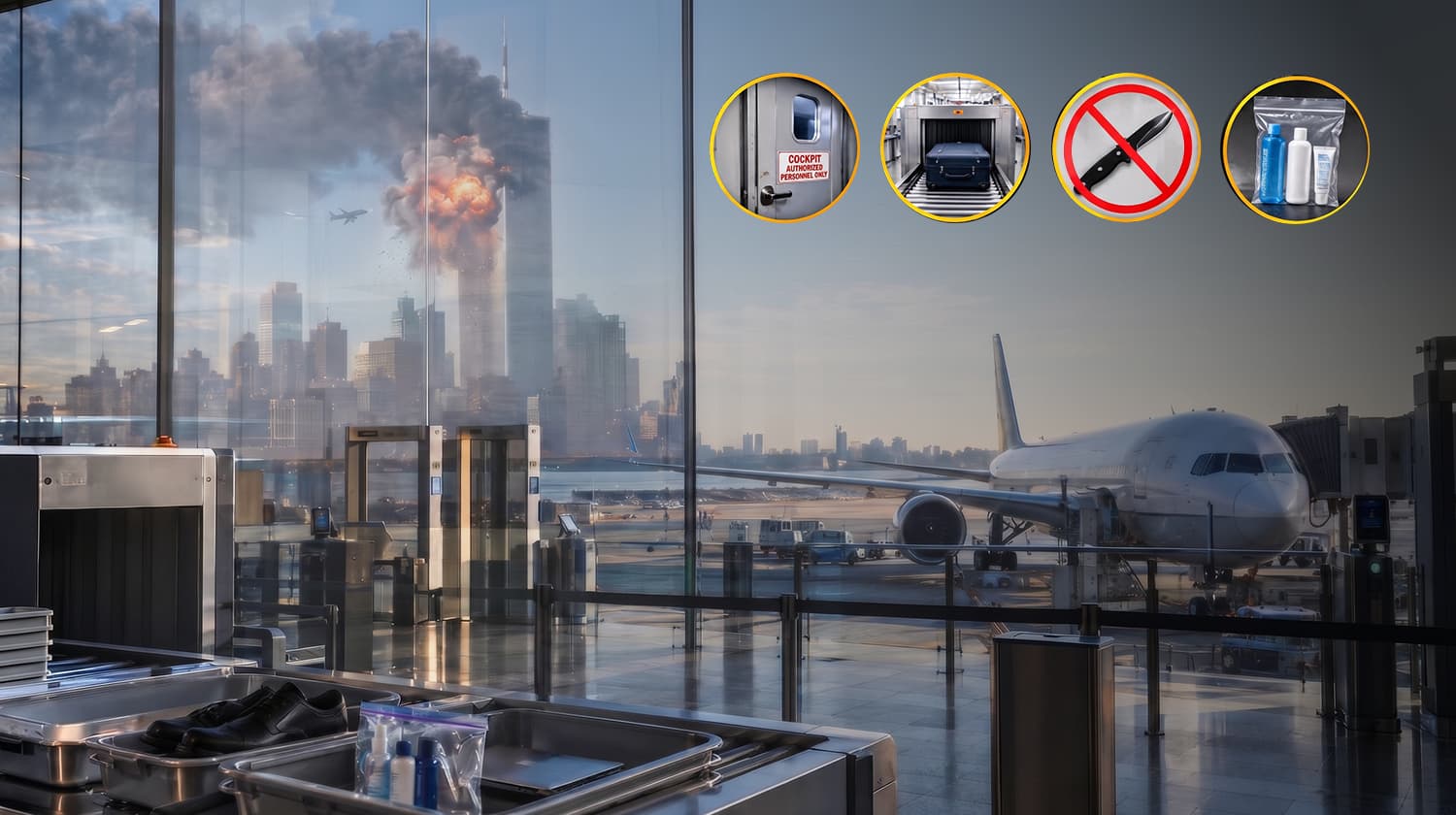
How 9/11 changed air travel forever
How the 9/11 attacks reshaped air travel worldwide, leading to stricter airport security, enhanced screening, reinforced cockpit doors, tighter baggage checks and new aviation safety standards.
- Explainer
Trending
By Md Abbas
Explainer - -
Illustration: Beyond Headlines
The new draft of the Cyber Protection Act (CPA) proposes lower penalties for spreading rumours and misinformation, changes to the definition of defamation and special legal protection for registered media outlets.
However, provisions allowing content blocking, warrantless searches and arrests, and immunity for government officials remain in place.
So what has actually changed in the new draft? What has been removed, and which controversial provisions remain?
Debate over Bangladesh's cyber protection laws is not new. The Digital Security Act 2018 drew widespread criticism over allegations that it had been used against journalists, writers, rights activists and ordinary citizens.
After the mass uprising of 2024, the interim government repealed it and promulgated the Cyber Protection Ordinance 2025 in May last year.
The Cyber Protection Act 2026 was subsequently passed by parliament in June. Yet, just months after it came into force, the government has initiated another move to amend it.
On November 10, the Information and Communication Technology Division published a draft of the proposed amendments, inviting public comments until November 25.
An examination of the official amendment draft and comparative statement shows that although penalties for certain offences have been reduced, several controversial provisions remain. In some areas, the draft also proposes expanding government powers and the scope of offences.
Senior journalists and civil society representatives fear the proposed law will severely curtail media freedom and citizens’ freedom of expression.
They argue that its ultimate objective is to establish the exclusive power and dominance of the executive and the bureaucracy. They have also described it as a potential tool for depriving citizens of their rights.
Under Section 26A of the new draft, spreading rumours and misinformation through cyberspace would carry a maximum penalty of five years' imprisonment, a fine of Tk 10 lakh, or both.
The previous draft, published in September, proposed a maximum prison term of 10 years and a fine of Tk 40 lakh, meaning the revised proposal halves the prison term and cuts the maximum fine by 75 percent.
The definition of rumours has also been revised. It now covers the intentional creation, publication or dissemination of false or distorted information that causes public panic, tension or social unrest.
The previous draft also allowed unsubstantiated or unverified information to be treated as a rumour. The new definition is somewhat more specific, but it still does not set out clear criteria for deciding whether information has been intentionally distorted.
More importantly, Section 46, which deals with legal procedures, public intimidation and the classification of offences, retains the provision making the offence of spreading rumours and misinformation cognisable and non-bailable.
So even with lower penalties, the risk of arrest and the difficulty of securing bail remain.
The new draft introduces cyber defamation as a separate offence under Section 25A, adopting the definition of defamation set out in Section 499 of the Penal Code.
The offence would carry a maximum penalty of two years' imprisonment, a fine of Tk 5 lakh, or both. It would be bailable and non-cognisable.
Section 25B makes humiliation or bullying an offence, punishable by up to three years’ imprisonment, a fine of Tk 5 lakh, or both. This offence would be cognisable and non-bailable.
Section 2, which defines key terms used in the legislation, describes humiliation as conduct that goes beyond constructive criticism and harms a person's dignity and self-respect through contempt, ridicule or disparagement.
Mocking someone’s physical appearance, complexion or bodily features may fall within this definition, as may memes and caricatures made with altered images, videos or voice recordings.
This raises particular concerns about political cartoons and memes.
Satirising political decisions or actions is not the same as deliberately attacking someone’s personal dignity. Yet the draft gives no clear criteria for where the boundary of constructive criticism ends.
Under Section 46A, a tribunal’s prior permission would be required before anyone could be arrested over news reports, opinions, photographs or cartoons published or broadcast by a registered media outlet.
Section 29, which deals with offences committed by companies or registered media outlets, also proposes safeguards.
A registered media outlet or its operating organisation must receive at least 15 days' written notice and a chance to defend itself before a court could take steps to suspend, cancel or prohibit its registration or licence, or prohibit its operations.
However, these protections apply only to registered media outlets. It remains unclear whether freelance journalists, independent online journalists, writers and ordinary citizens would enjoy the same safeguards.
Transparency International Bangladesh Executive Director Dr Iftekharuzzaman criticised this arrangement as discriminatory.
Dr Iftekharuzzaman, executive director of Transparency International Bangladesh, called this arrangement discriminatory.
In his reaction to an English daily on November 13, he argued that Article 27 of the Constitution guarantees equality before the law. Providing special protection to media outlets while denying the same safeguards to other citizens could therefore raise constitutional questions.
He also described the proposed immunity for government officials acting in good faith as "blanket discriminatory immunity".
On September 28, Home Minister Salahuddin Ahmed, following a meeting with journalists, assured that the law would not be allowed to become an instrument for harassing journalists.
He also supported the proposal for prior court approval before legal action could be taken against journalists.
At a cabinet committee meeting on November 4, chaired by Posts, Telecommunications and Information Technology Minister Fakir Mahbub Anam, the government also said journalists’ opinions would be given priority.
However, the new draft limits prior court approval to arrests over content published or broadcast by registered media outlets. The broader assurance that prior court approval would be needed before any legal action against journalists is not fully reflected in the draft.
Section 8(2) proposes expanding the authority to remove or block online content.
While the previous provision primarily referred to action through law enforcement agencies, the new draft would also allow the Ministry of Information and Broadcasting, as well as other agencies, organisations or forces authorised by the government, to initiate such action.
Content could be blocked on grounds including threats to the country’s integrity, dignity, security, defence and public order; religious or communal hatred; incitement to ethnic violence; defamation; humiliation; bullying; blackmailing; and sexual harassment.
However, broad terms such as national dignity and public order are not clearly defined.
A more significant change appears in Section 8(4).
Under the existing law, a tribunal’s approval must be obtained within three days of blocking content.
The new draft proposes replacing this mandatory approval with a provision allowing aggrieved individuals or organisations to apply to the relevant authority for restoration of the content.
The application would have to be resolved through a hearing within 15 days, and the reason for blocking must be communicated within three days.
In other words, the proposal replaces independent judicial oversight with an administrative review mechanism.
The draft also proposes removing the requirement to make information about blocked content publicly available.
Sections 33 to 35 deal with investigation, searches, seizures and arrests. In certain circumstances, particularly when there is a risk of evidence being destroyed, police officers are authorised to conduct searches, seize digital devices and make arrests without a warrant.
Journalists may store the identities of confidential sources, sensitive documents and materials for investigative reports on their phones and laptops.
Misuse of these powers could therefore endanger journalism and the safety of sources. The new draft does not include journalists’ demand for prior court approval in these sections.
The new draft does not reduce penalties for every offence.
Under Section 25, the proposed maximum prison term for sexual harassment, blackmailing and the publication of obscene material in general cases would increase from two to five years, while the maximum fine would rise from Tk 10 lakh to Tk 20 lakh.
If the offence is committed against a woman or a child under the age of 18, the maximum prison term would increase from five to 10 years, and the maximum fine from Tk 20 lakh to Tk 40 lakh.
Under Section 26, the proposed maximum prison term for spreading religious or ethnic hatred and inciting violence would increase from two to five years. The maximum fine would stay at Tk 10 lakh.
Section 52 proposes immunity from civil or criminal proceedings for the chairperson and members of the National Cyber Security Council, and for officials and employees authorised under the law, for actions taken in good faith.
Officials may require protection when carrying out their duties, but there must also be guarantees that victims can seek redress if those powers are abused.
Contacted, Dr Iftekharuzzaman said, "The draft CPA was conceptually faulty to begin with, and this new draft is even more constitutionally flawed."
First, he said, the law conceptually contradicts global good practice, where such laws are not meant to criminalise or police free speech, misinformation, disinformation or defamation, which fall under the jurisdiction of civil law.
"Cyber protection laws are essentially meant to protect cyber infrastructure, data integrity and online safety, such as by preventing hacking or digital fraud. From this perspective, changes in the degree of punishment under certain provisions and defining defamation, whether specific enough or not, do not make any difference," he said.
He also identified at least two areas where the proposed law violates the constitutional provision of equality before the law.
One is the special protection for journalists and media houses, which in themselves may be considered welcome but raises concerns about discrimination against all other categories of citizens and entities.
The second is the blanket immunity granted to any action by members of the proposed Cyber Protection Council and anyone authorised to exercise powers under the law, provided their actions are taken in good faith.
This effectively assumes that this virtue of good faith would never be abused. Whereas the track record is replete with allegations of abuse by such authorised individuals and institutions, he said.
There are reasons, therefore, to be concerned about the law's chilling effect on the right to free speech and the right to dissent, he added.
In substance, Iftekharuzzaman said, the law is likely to become as repressive a weapon for targeted harassment as the repealed DSA. That law was the key legal facade for gross violations of fundamental rights under the authoritarian regime against thousands of people for exercising dissent and free speech, including many of those who are currently in power.
-The writer is a freelance journalist and corporate communications professional.
How the 9/11 attacks reshaped air travel worldwide, leading to stricter airport security, enhanced screening, reinforced cockpit doors, tighter baggage checks and new aviation safety standards.
- Explainer
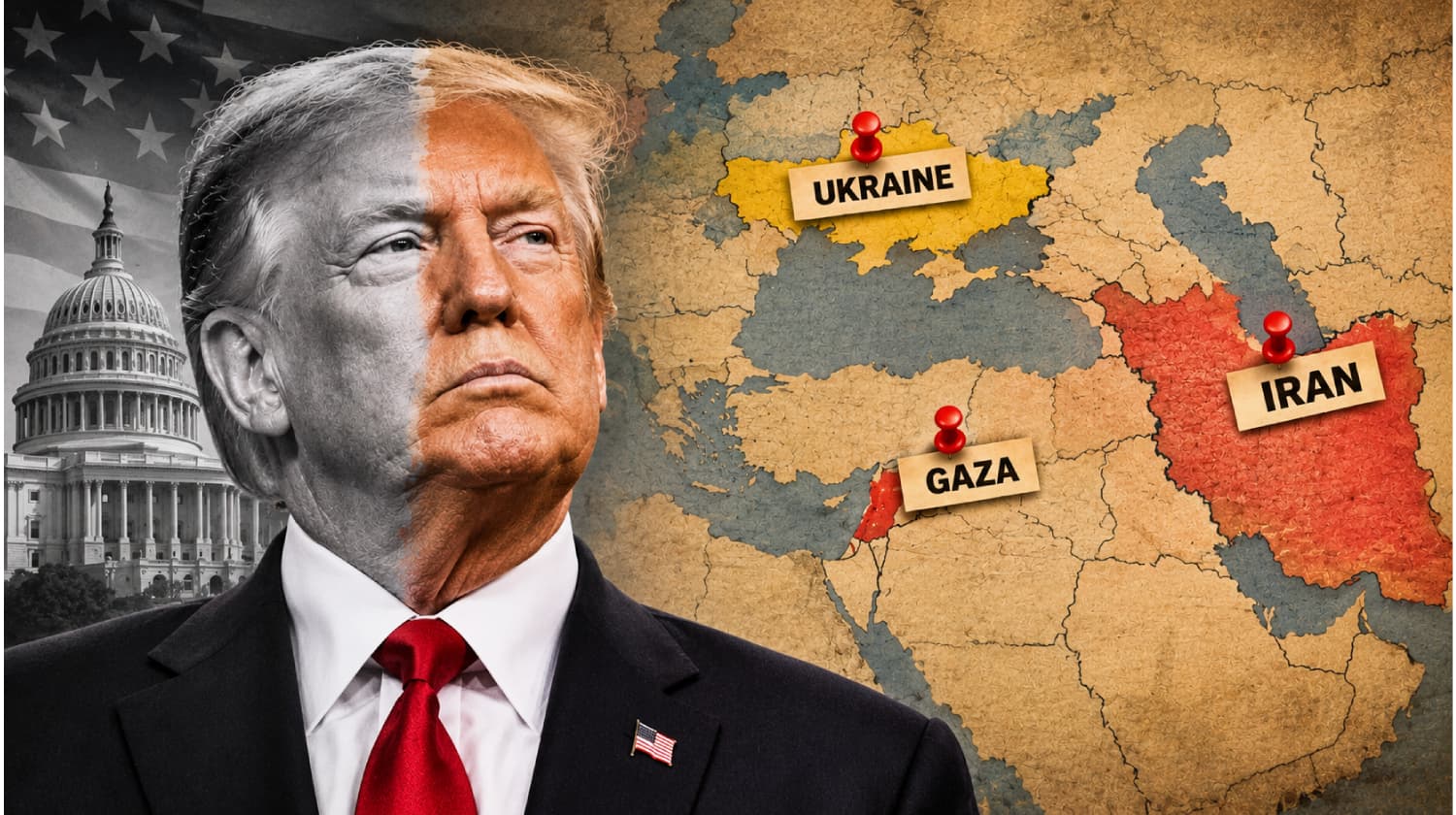
Could the US midterm elections force a shift in Donald Trump’s foreign policy? This explainer examines what Democratic gains could mean for the Iran conflict, Washington’s support for Israel, the crisis in Gaza, and military aid to Ukraine.
- Explainer