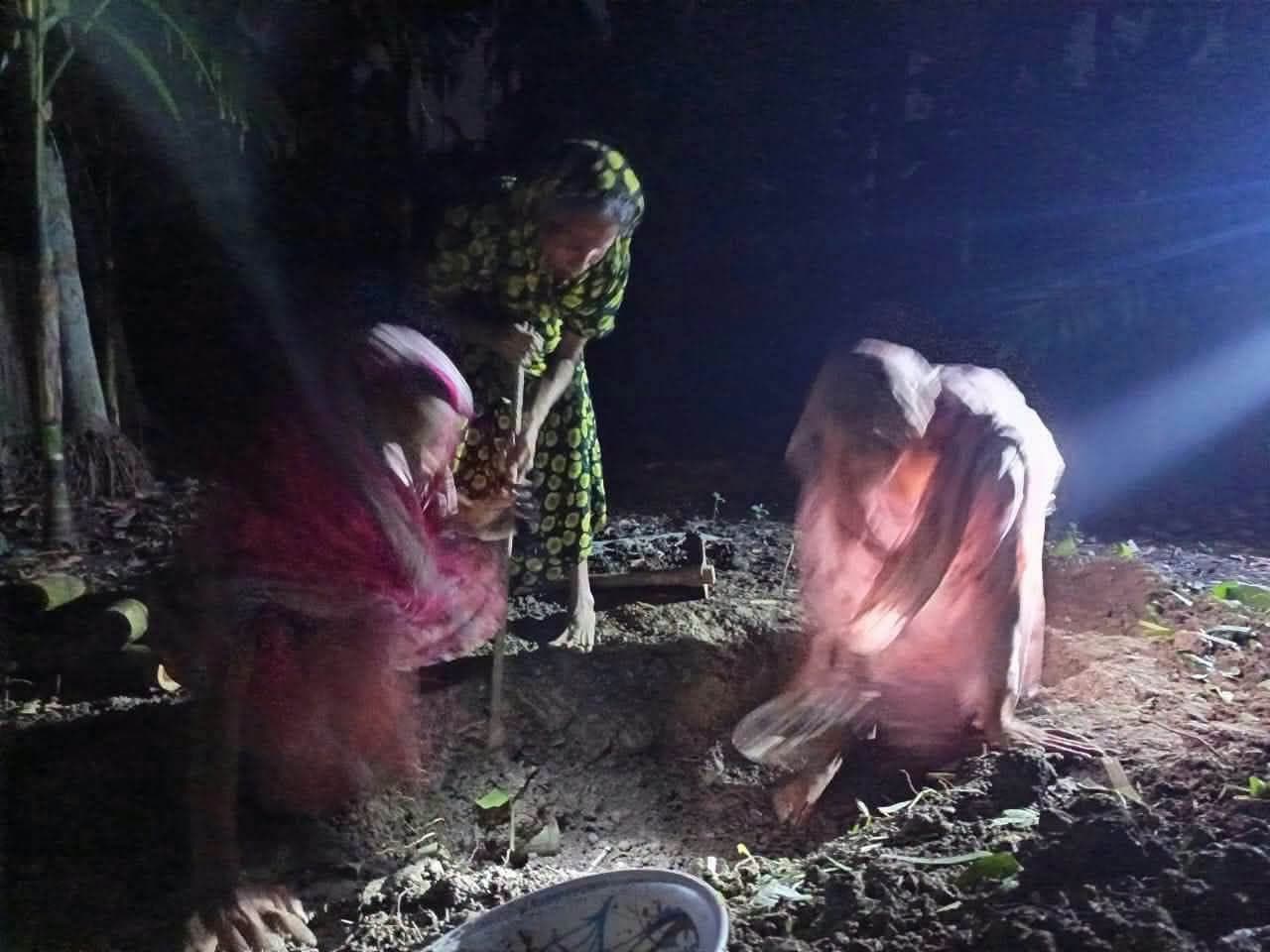
Manik Poshari's burial / A daughter digs her Freedom Fighter father’s grave past midnight
A daughter and two sisters dug the grave of Manik Poshari in an ungodly hour past midnight in Pirojpur’s Chitalia village.
- Opinion
Trending
Opinion - -
Photo: Collected
The video has triggered outrage across Bangladesh. In it, an aggrieved father confronts a madrasa vice principal accused of sexually harassing his seven-year-old daughter. Accompanied by relatives and some local people, he seeks answers from the teacher, Moslem Ahmed, at the madrasa compound in Tongi, Gazipur. The confrontation soon turns physical. As emotions boil over, the teacher is slapped and beaten. Police later rescue him.
The footage goes viral. Moslem is arrested and a case is filed against him. The madrasa principal, meanwhile, files a counter-case against the father, accusing him of assault, vandalism and looting valuables worth Tk 17 lakh. Since then, public debate has split into two opposing camps.
One side argues that the accused got what he deserved and that the girl's family merely delivered instant justice in a country where the formal justice system often fails. Some have even praised the father for his actions. Responding to the madrasa authorities' allegations of vandalism and looting, the father has denied the accusations, saying he went there to seek justice for his daughter, not to incite a mob.
The other side, including a section of madrasa teachers and religious leaders, has focused on the assault against the teacher and the alleged vandalism, with some attempting to justify Moslem's conduct. They have threatened demonstrations unless the father and those involved in beating the teacher are arrested and brought to justice. There have also been reports of threats against the father.
Caught between these competing narratives is a more fundamental question: who, amid all this outrage, is speaking for the child? Are we even thinking about the girl?
Any allegation of sexual harassment involving a seven-year-old deserves the utmost seriousness. If the allegation is true, the child has suffered not only a violation of her bodily autonomy but also a betrayal of trust by an adult placed in a position of authority. Reports suggest that she became so frightened after the incident that she stopped attending the madrasa. That alone should prompt serious concern and demand a sensitive approach to the case, along with a careful investigation.
The child's father and relatives had every reason to be angry. Few parents can imagine remaining calm after hearing such allegations about their young child. Their pain and fury are understandable. But that does not make taking the law into their own hands either lawful or justified.
Such acts are often defended in the name of public anger. But every time a crowd takes the place of legal institutions, the foundations of justice become a little weaker.
What is equally concerning, however, is the response of the madrasa authorities. Rather than demonstrating a willingness to cooperate with an impartial investigation, the principal has filed a counter-case against the father, while some religious leaders have rallied behind the accused teacher. Their emphasis on the alleged assault and vandalism, while the allegation involving a seven-year-old girl remains unresolved, raises questions about their priorities.
This is not to suggest that the father should be above the law or that the allegations against him should not be investigated. But the response of a religious educational institution to an allegation of sexual abuse involving a child should begin with concern for the child and a commitment to establishing the truth. When its response appears focused primarily on defending the accused and protecting its reputation, it risks undermining public confidence in the institution itself. An institution that holds itself out as a centre of moral and religious education should be particularly willing to demonstrate accountability.
Allegations of misconduct and abuse at some madrasas are now rampant. According to a report by The Daily Star, allegations of rape, attempted rape and sexual abuse of children were raised at six madrasas over just 16 days from October 8.
Religious leaders and madrasa representatives have every right to demand justice for someone they believe has been wronged. But that responsibility must also extend to demanding justice for children who may have been abused within institutions entrusted with their care. Genuine confidence in any institution comes not from denying its problems but from addressing them transparently.
There is another critical question that deserves attention: who will investigate the allegation involving the girl, and how will that investigation be conducted? An impartial investigation is essential, but so is the manner in which it is carried out. A seven-year-old child who may have experienced sexual abuse cannot be treated like an ordinary witness. Are the investigators equipped with the necessary training and sensitivity to speak to her without causing further distress? Will she have access to appropriate medical and psychological support? These essential to both protecting the child and establishing the truth.
The child's safety and well-being must take priority throughout the process. If she has experienced abuse, its effects may not end with the incident itself. Fear, shame, confusion and a loss of trust can follow a child into adolescence and even adulthood. She needs protection, emotional support and, if necessary, professional counselling.
Above all, she must not be made to relive the experience through repeated questioning, public scrutiny or an endless debate in which others speak over her. Her identity and privacy must also be protected. The investigation should not become another source of distress for a child who may already be struggling to understand what happened to her.
The state's responsibility, therefore, goes beyond ensuring that a case is filed and an accused person is arrested. It must ensure that the allegation is investigated fairly and transparently, with the care and sensitivity required when a child is involved. Anyone found to have broken the law, regardless of position, influence or motive, must be held accountable.
The entire episode and the public debate that followed are deeply unsettling. The discussion has become almost entirely about the father, the accused teacher and the opposing sides fighting over them. Everyone seems to have found a voice. The one person whose interests should matter most has all but disappeared from the conversation.
The real test of justice in this case is not which side wins the public battle. It is whether the little girl gets the protection, care and justice she deserves. And whether, when all the noise finally dies down, someone has made sure that she is safe, heard and able to move on with her childhood.
A daughter and two sisters dug the grave of Manik Poshari in an ungodly hour past midnight in Pirojpur’s Chitalia village.
- Opinion
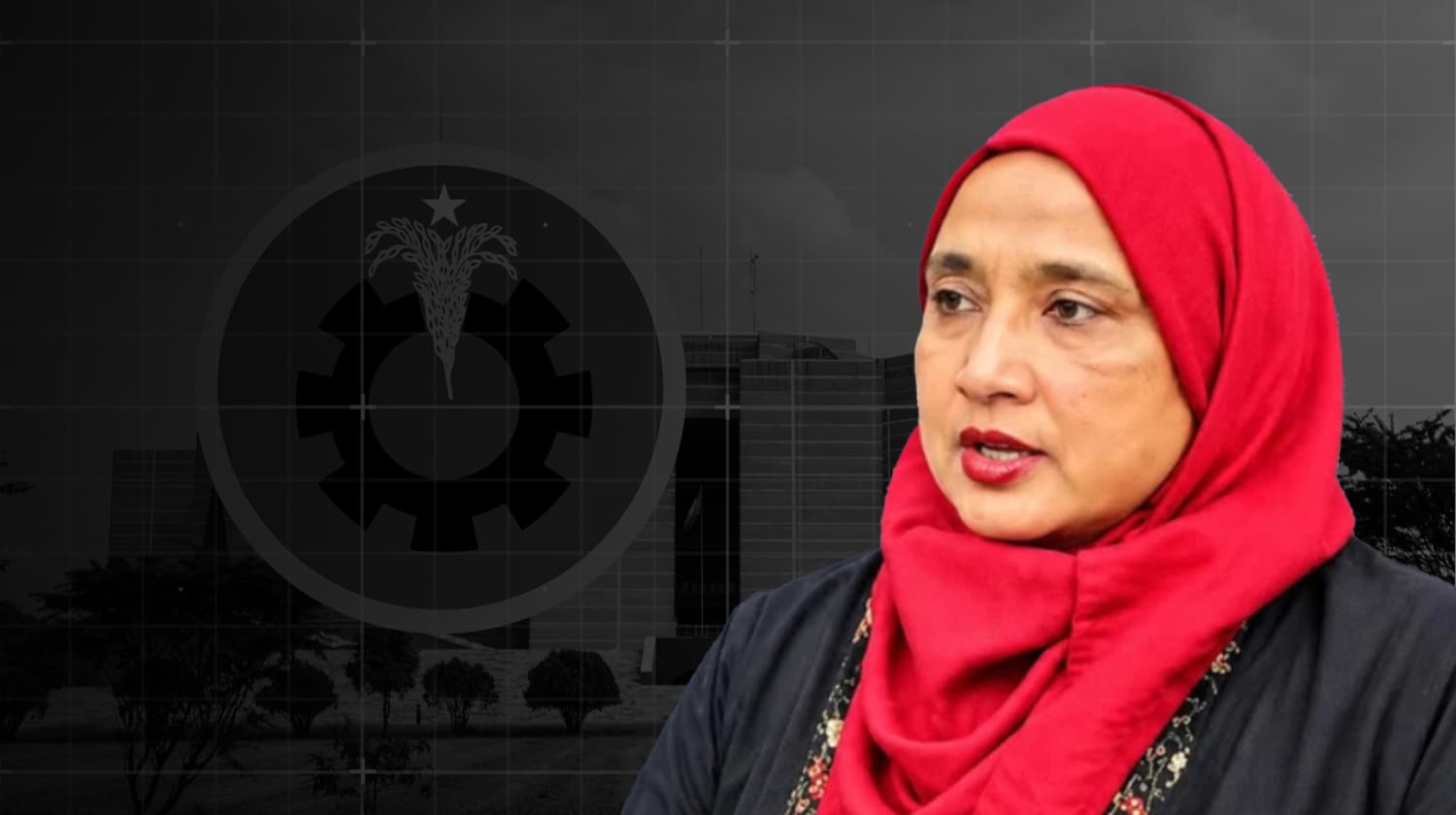
BNP reserved-seat lawmaker Ferdousy Ahmed submitted her resignation to the Speaker Hafiz Uddin Ahmad at the Jatiya Sangsad Bhaban amid the controversy over the attack, looting and vandalism at the Radda MCH-FP Centre in the capital’s Mirpur area.
- Opinion