Energy shortages, labour unrest, conflicting policy messages and doubts over government procurement are hurting Bangladesh’s reputation among foreign investors, according to the American Chamber of Commerce in Bangladesh (AmCham).
In an interview with The Daily Star recently, AmCham President Syed Mohammad Kamal said American companies remained interested in Bangladesh, but these concerns had made them cautious about new investment.
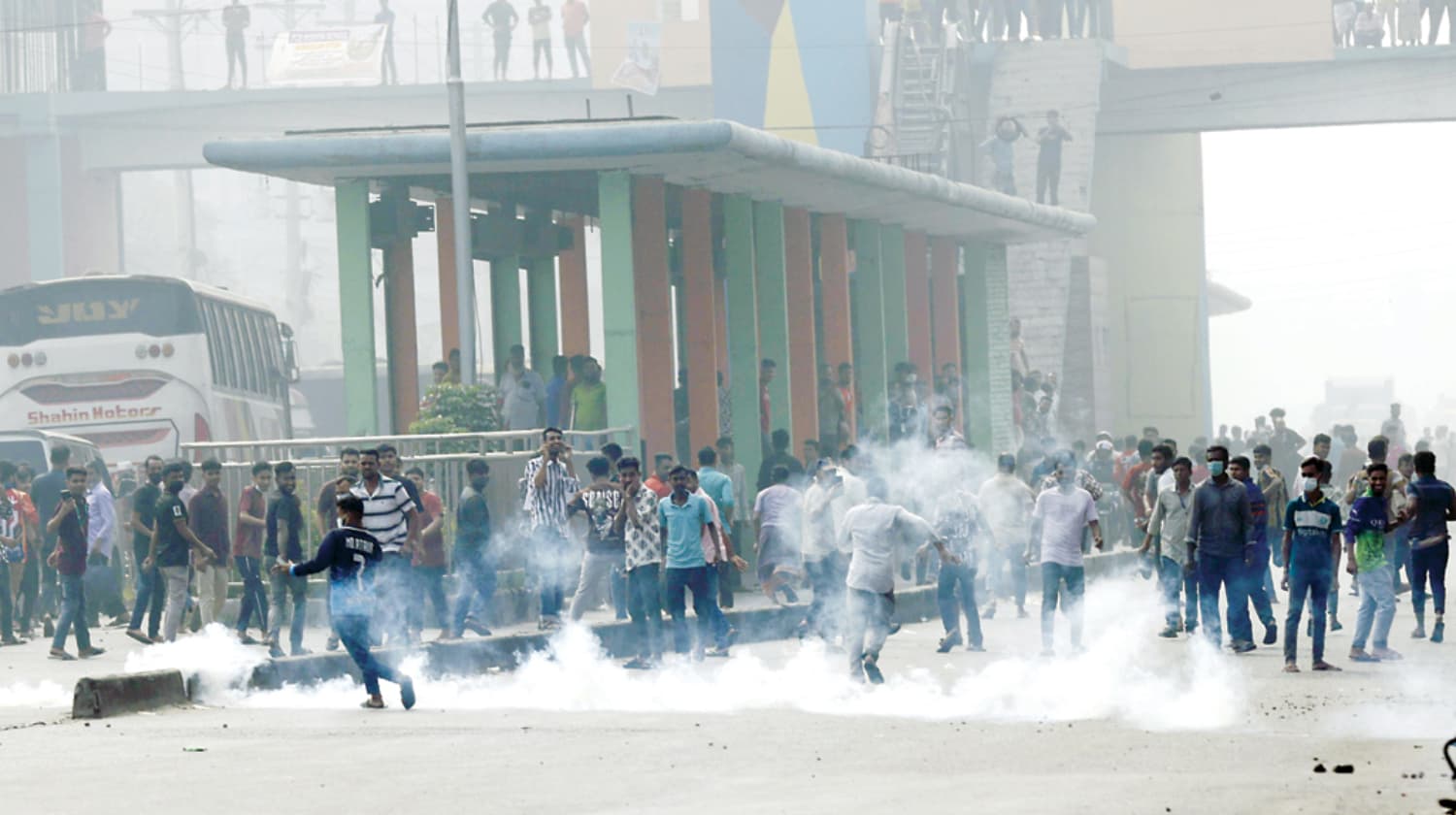
“The (lack of) energy security is denting the reputation of the country,” he said. Labour unrest was also affecting Bangladesh’s standing as an investment destination.
Some American investment had come in over the past two years, but nothing significant, he said, adding that companies were weighing Bangladesh against other markets.
ENERGY SHORTAGES, POLICY UNCERTAINTY
Kamal said the government needed to set out clear time bound milestones for improving energy supplies, arguing that investors could not plan new projects without knowing when adequate gas and electricity would become available.
Investors understood that shortages could not be resolved overnight, he said, but could not plan without a timetable. For instance, a company could plan a factory on the understanding that supply would be adequate in two years, since construction could take as long.
He questioned Bangladesh’s dependence on expensive spot-market LNG purchases and slow progress in domestic gas exploration.
The AmCham chief also criticised conflicting statements from officials, saying they confused businesses, and urged the government to focus on implementation rather than repeated announcements.
He welcomed the prime minister’s meetings with foreign companies but said they needed to produce results.
Investment had remained largely stagnant during the interim government, while businesses were still assessing conditions under the elected government, he noted.
Kamal said Bangladesh needed to cut business costs and improve conditions for investors, citing Vietnam as a country that had attracted substantial foreign investment through a more stable business environment.
He welcomed government steps to ease dividend repatriation, previously a major concern for foreign companies.
However, he noted that many economic zones remained non-operational, while export processing zones had performed relatively well.
CONCERNS OVER LNG TERMINAL DEAL
Kamal questioned the government’s handling of the third floating LNG terminal project, citing its cost, the procurement process and the Chinese contractor’s experience.
On November 12, the government approved China National Energy Engineering & Construction Co Ltd’s (CNEE) proposal despite questions over its higher cost and its lack of experience in developing such facilities.
The Daily Star earlier found that large portions of the proposal closely resembled one submitted by US-based NS Energy Navigation 38 days earlier. A map in CNEE’s submission still carried the label “Proposed NS Energy FSRU”.
“How could information reach a competitor like this?” Kamal asked.
“If there are verbatim similarities between the two proposals, it is a risky proposition,” he said, warning that mishandling of commercial information could discourage foreign companies from submitting proposals.
He also questioned whether the government had properly compared competing proposals on cost, technical experience and delivery schedules.
“If I give the work to an inexperienced company and after 18 months it says it cannot deliver, what happens to the energy security roadmap? What happens to the country? What happens to investors’ money?” he asked.
According to Kamal, developing a floating storage and regasification unit (FSRU) in the Bay of Bengal involved technical and environmental challenges.
As per his estimates, environmental assessments could take eight to 12 months and construction another 18 months to two years. Even with some work in parallel, the project would take about two and a half years.
The AmCham chief said CNEE’s proposed build-own-operate arrangement would not transfer ownership of the terminal to the government at the end of the contract.
That could be justified if it cost less, he said, but he questioned why the government would proceed with what he considered a more expensive proposal.
The Daily Star earlier reported that CNEE’s proposed daily fee was $342,000, against $254,000 for Excelerate Energy’s existing terminal and $249,000 for Summit LNG’s. The terminals differ in capacity and contractual terms.
“We are not saying American companies must receive these contracts,” Kamal said, calling for a proper comparison of competing proposals.
$5B INVESTMENT PLAN
Earlier in August, AmCham, after a meeting with the prime minister, announced that it was working to attract $5 billion in fresh US investment to Bangladesh over the next five years. The chamber reiterated its commitment earlier this month as well.
Speaking on the issue, the chamber’s chief said its member companies had invested approximately $5 billion in Bangladesh over the past 15 to 17 years.
Before meeting the prime minister in August, the chamber assessed the possibility of attracting a similar amount during the government’s term.
It identified renewable energy, life sciences, cybersecurity, artificial intelligence, IT, advanced manufacturing, logistics and consumer goods as priority sectors.
Some companies had concrete investment plans, while AmCham was aware of potential investments worth more than half the target, Kamal said. The chamber was working to identify opportunities for the remainder.
Existing American companies were also considering further investment, he said and a proposed factory in Ishwardi that would manufacture products used in wigs and other hair-related applications.
He also identified LNG infrastructure, and offshore oil and gas exploration as areas with investment potential.
Life sciences offered further opportunities, with American companies already supplying medical products such as cardiac stents and lenses used in eye treatment, he said.
Recent engagement involving the US Food and Drug Administration could also open opportunities for Bangladeshi pharmaceutical exports to the US, he added.
Speaking on the trade deficit between Bangladesh and the US, Kamal welcomed the purchases of Boeing aircraft and American wheat but said narrowing the trade gap would take time because readymade garments made up a large share of exports.
He also said AmCham was also working to bring a delegation of American companies operating in other countries but not yet investing in Bangladesh.
Reliable energy supplies, fewer industrial disruptions, lower business costs and transparent procurement remain essential to attracting new American investors, he added.
Source: The Daily Star