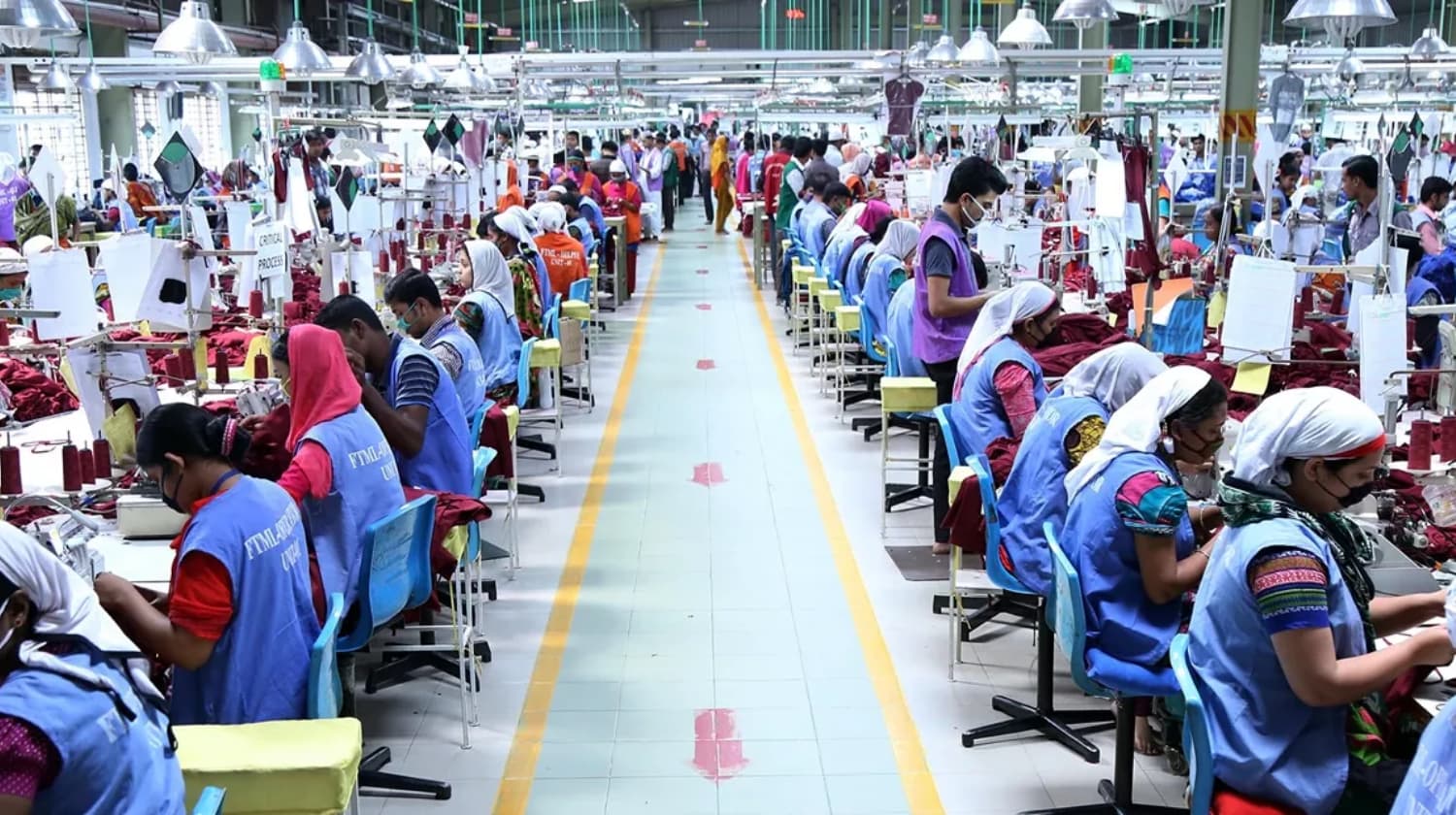
Bangladesh's apparel exports to the European Union fell significantly faster than the overall market in the first nine months of 2026 year-on-year, with the country losing more export value than the EU's entire import market contraction as major competitors strengthened their positions.
Bangladesh's apparel shipments to the EU declined 11.91% year-on-year to €13.48 billion in January-September 2026, compared with a 2.46% fall in total EU apparel imports to €70.72 billion, according to Eurostat data compiled by Bangladesh Apparel Voice (BAV).
Bangladesh lost around €1.82 billion in export value during the period, exceeding the €1.78 billion contraction in the EU's overall apparel import market. Its share of EU apparel imports consequently fell to 19.06% from 21.10% a year earlier.
The country's performance was particularly weak in January-April, when exports dropped 20.89%. Although the decline narrowed to 1.25% in May-August, shipments fell another 9.49% in September, more than three times the EU market's 2.72% contraction that month. Bangladesh accounted for around 69% of the EU's overall import decline in September.
The decline involved both lower shipment volumes and falling prices. Bangladesh's export volume dropped 5.74%, while its average unit price fell 6.54% to €13.70 per kilogram, around 30% below the EU average of €19.59.
MA Jabbar, managing director of DBL Group, said Bangladesh's concentration on cotton-based products was leaving it at a disadvantage against competitors with stronger man-made fibre (MMF) capabilities.
He said China and Vietnam had developed more extensive facilities for producing man-made fibre garments and benefited from integrated supply chains, including access to fabric from China. Bangladesh's limited investment in this segment was restricting its ability to compete across the full range of products demanded by European buyers.
Jabbar also identified sustainability and energy security as increasingly important considerations for international brands. He said Bangladesh needed to demonstrate credible progress towards net-zero production and ensure reliable, affordable energy to maintain buyer confidence.
China strengthened its position as the EU's largest apparel supplier, with exports rising 4.46% to €24.25 billion and shipment volumes increasing 6.38%. Its market share climbed to 34.29% from 32.02%.
Vietnam also increased its export value by 4.33% to €3.47 billion despite a 3.55% fall in volume, as its average unit price rose 8.18%. Meanwhile, India, Pakistan, Turkey, Sri Lanka and Indonesia recorded export declines ranging between 8.8% and 10.7%.
Shovon Islam, managing director of Sparrow Group, said the widening gap between the contraction in Bangladesh's exports and the overall EU market pointed to a weakening competitive position.
He said buyers were increasingly considering the implications of Bangladesh's LDC graduation and stricter European due-diligence requirements when deciding where to source garments.
Islam said Bangladesh needed to accelerate negotiations for preferential trade arrangements with the EU while preparing exporters to meet requirements on supply-chain traceability and due diligence. He also pointed to high borrowing costs, limited access to capital, expensive energy and unreliable gas and diesel supplies as factors eroding manufacturers' competitiveness.
Ashikur Rahman, principal economist at the Policy Research Institute of Bangladesh, said regional competitors such as India and Vietnam were advancing their positions through free trade agreements and stronger integration into global markets.
He said Bangladesh's post-LDC export competitiveness would depend on moving beyond traditional apparel products and established destinations through broader export diversification, stronger trade agreements, improved productivity and logistics, and a more competitive exchange rate.
The figures suggest Bangladesh's underperformance cannot be explained solely by weaker European demand. Losing market share while competitors expand their presence highlights the urgency of addressing production limitations, energy and financing constraints, and gaps in trade access to protect the country's position in its largest regional apparel market.
Source: The Business Standard