Bangladesh faces a tougher test of its public finances from mid-2027, when the International Monetary Fund (IMF) and World Bank will start using two new measures to assess debt risks.
Alongside the regular debt-to-GDP ratio, the multilateral lenders will look at how much government revenue goes on interest payments. They will also measure how much the government must raise each year to cover its budget deficit and repay maturing loans, relative to the size of the economy.
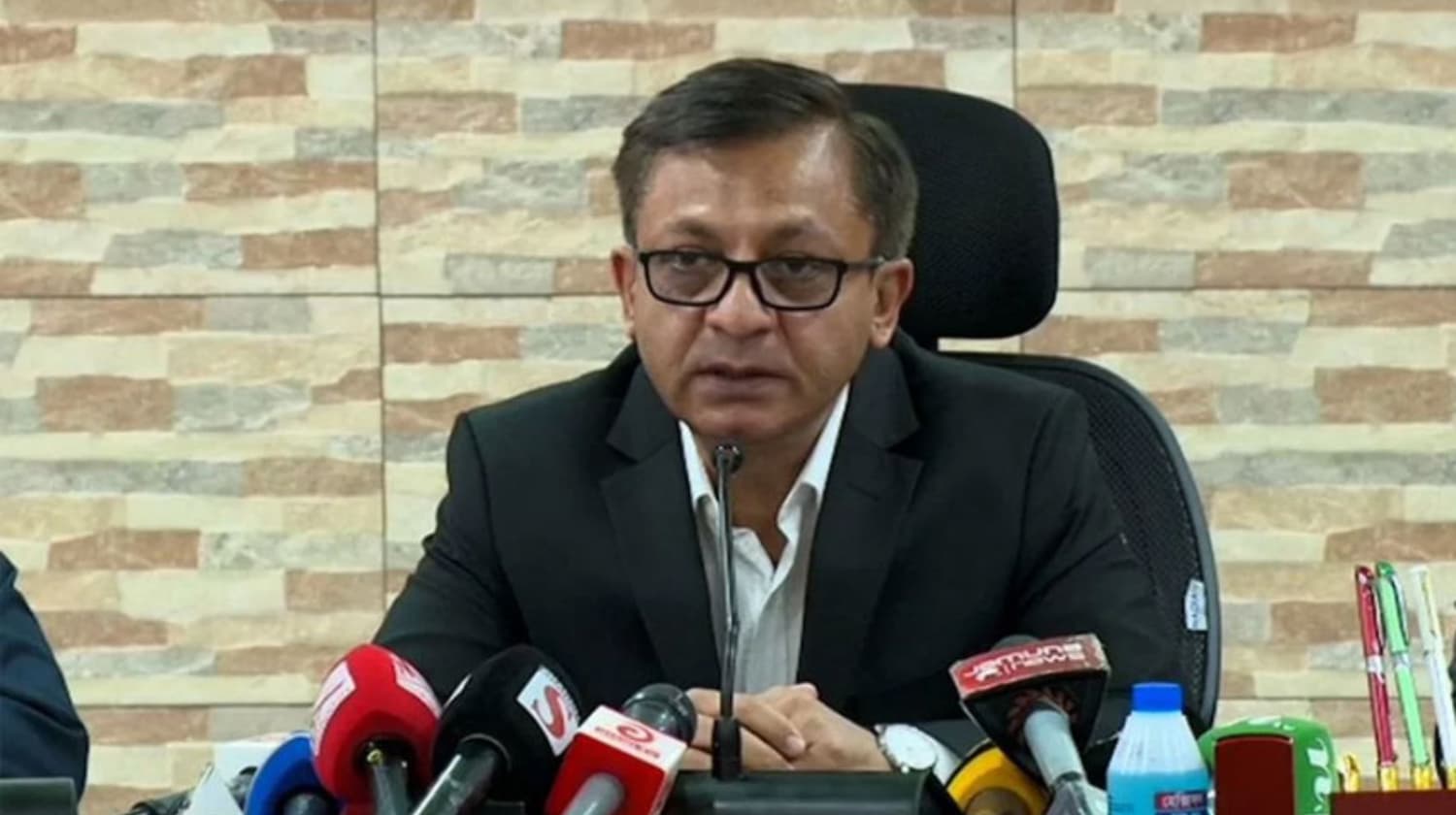
IMF officials shared the changes at a two-day debt conference in Cox’s Bazar, organised by the finance ministry and the Asian Development Bank (ADB), which concluded on Monday.
Participants included officials from the Finance Ministry and Bangladesh Bank, debt management experts from different countries, and representatives of the World Bank, IMF and Asian Development Bank. Finance ministry officials from Sri Lanka, Pakistan, Indonesia and Malaysia also attended the conference.
How much of Bangladesh's revenue go into interest payments?
Interest payments consume nearly a third of government revenue, raising concerns over Bangladesh’s growing debt-servicing burden.
The country’s interest payments took around 30 percent of government revenue in 2025, and the interest bill is projected to reach Tk 1.5 trillion, or about $12 billion, this fiscal year.
The IMF executive board approved the new rules, known as the revised Debt Sustainability Framework for Low-Income Countries, in September this year. The World Bank followed shortly afterwards. It is the first overhaul of the framework since 2017.
Bangladesh’s public debt stood at $188.79 billion in fiscal year 2025-26, or 41 percent of GDP, according to the IMF. Of that, $101.24 billion was borrowed at home and $87.55 billion from abroad.
That ratio is modest by regional standards. But the new framework judges debt by what it costs relative to revenue as well as by its size, and on that basis Bangladesh looks much weaker.
The country’s tax take is among the lowest in the world, and government borrowing has tilted towards costly domestic instruments such as national savings certificates and short-dated treasury bills.
“Given Bangladesh’s already high interest-payment-to-government-revenue ratio, the country may face a less favourable debt sustainability assessment under the revised framework,” said a summary of the debt conference on the new rules.
The IMF already rates Bangladesh at moderate risk of both external and overall debt distress, with limited room to absorb shocks. The risk level was raised from low this year.
Under the new rules, a country whose ratios persistently breach the thresholds in its central forecast, rather than only under stress scenarios, would be rated at high risk.
The thresholds have not been published. The IMF and the World Bank say they will vary according to each country’s assessed debt-carrying capacity, and will be set out in technical guidance. Bangladesh is classed as having medium capacity.
The ratings are important because they shape the mix of grants and loans a country receives from the World Bank’s concessional arm, the borrowing limits set in IMF programmes and, increasingly, how private creditors and rating agencies price risk.
Maxym Kryshko, the IMF resident representative, told the conference that the three-year extension to Bangladesh’s graduation from least developed country status offers a window for reform, particularly to raise revenue.
Prasad Ananthakrishnan, a former IMF official, said rising global borrowing costs would make debt harder to manage.
He said global public debt is projected to climb from about 94 percent of GDP in 2025 to 102 percent by 2031.
SCATTERED DEBT MANAGEMENT
At the conference, officials also urged Dhaka to consolidate debt management, which is now spread across several institutions. The fragmentation creates problems with data consistency, coordination and operational efficiency.
Julian Szymanski, an ADB consultant, set out how to establish and strengthen an effective debt management office (DMO).
He said a single office with integrated databases and clearer legal powers is essential for efficient borrowing, risk management, transparency and accountability.
A modern DMO needs three core functions, he said. Those are a front office for borrowing, a middle office for strategy and risk analysis, and a back office for recording and servicing debt.
Rashed Al Mahmud Titumir, the prime minister’s adviser on finance and planning, told the conference that Bangladesh must own its debt management strategy, borrowing plan and risk framework.
Transparent debt reporting, responsible fiscal management, honest engagement with creditors and an appropriate separation between monetary policy and deficit financing are essential to building confidence in Bangladesh as a sovereign borrower, he said.
On revenue, Titumir said one of the most important debt reforms is to collect more of what the state is owed.
“An increase in revenue of even two percentage points of GDP over the next five years could significantly improve our debt-service capacity and create much-needed fiscal space,” he said.
The prime minister’s adviser added that a stronger debt management office, supported by a modern Public Debt Act, would further strengthen the country’s institutional capacity and risk management.
Source: The Daily Star